









No matter your decorating style, houseplants offer a simple way to liven up your indoor space. From the smallest succulents to towering rubber trees, there’s fauna available to suit every home. And while many people purchase plants with the goal of elevating their interiors, some individuals also use them as a means to freshen up their interior air. But the question is: Do indoor plants improve air quality on their own?
If you’re under the assumption that plants are capable of purifying your indoor air, you’re not alone. This theory has circulated for some time, but recent findings are a bit more nuanced.
Fact vs. Fiction: Do Houseplants Improve Air Quality?
The idea that plants could purify indoor air is largely based on a study performed in 1989 by the National Aeronautics and Space Administration (NASA). Its findings indicated there were certain indoor plants that could improve air quality by taking in carbon dioxide and returning oxygen to the air via photosynthesis1.
Thrilled by NASA’s findings, many publications recommended using plants featured in the study, including ivy, ficus, and pothos, as a way to eliminate volatile organic compounds (VOCs) from the home environment. Yet, more recent research has revealed that it’s not quite so simple: NASA’s study was performed in a controlled environment — specifically, sealed chambers. So, it had experts wondering: Do plants improve air quality in home environments the same way1?
Unfortunately, experts now understand that the original study’s findings can’t be applied to our more complex indoor living spaces. Not only do our home spaces tend to be larger, but they’re also exposed to ongoing VOC emissions. Further, the number of plants needed to achieve the effects in NASA’s research would be tremendous: nearly 700 for a 1,500 square-foot home. In other words, without having a full-scale indoor nursery, you’re unlikely to reap any air purifying benefits from your houseplants1.
How Does Indoor Air Quality Affect Plants?

Even if they don’t have the purifying effects we once thought, there are still plenty of reasons to love potted plants. You might grow your own herbs to enjoy fresh basil from your windowsill, or hone your green thumb with a low-maintenance air plant. Living and working in environments with houseplants has even been shown to support mental health, with outcomes such as reduced anxiety and enhanced productivity2.
If you do decide to keep houseplants, one thing you’ll want to do is optimize your indoor air quality—not only because your plants won’t, but because they can benefit from cleaner air, too. Dust particles, in particular, can accumulate on leaves and clog pores, interfering with the important process of photosynthesis. Over time, this could affect growth, leading to plants that are less vibrant or have fewer blooms3.
Ways to Improve Your Indoor Air Quality
Fortunately, there are several ways to boost your home’s air quality for all living things, both leafy and not.
Minimize VOCs
While we may not be able to escape VOCs entirely, reducing or avoiding use of known sources can help. Consider clean or natural alternatives for common household chemicals, including cleaning products and air fresheners4.
Let Fresh Air In
While we often think of pollution as an outdoor problem, the air in our homes can actually be up to five times more polluted than outside. Allow some fresh air to enter your space by keeping the windows open for 10 minutes every day4.
Eliminate Dust
Since dust is an irritant to plants and people alike, reduce it in your home by vacuuming regularly, dusting surfaces, and replacing your air filters at recommended intervals. You can also gently wipe down leaves or give plants a rinse to eliminate any particles that have settled on them3.


Use an Air Purifier
Even with the strategies above, pollutants are difficult to escape in enclosed environments. If air quality is a concern in your home, an air purifier is the best investment for tackling pollen, dust, and other indoor pollutants1.
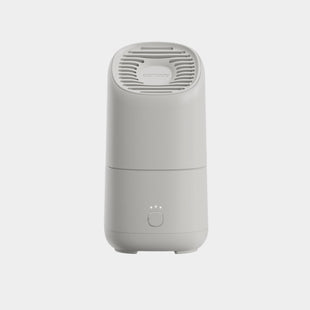
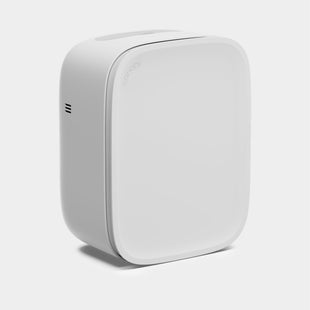
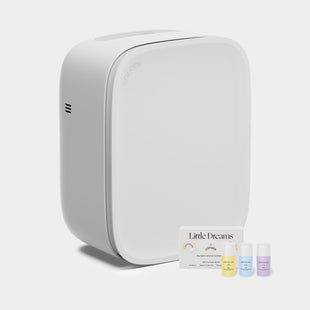
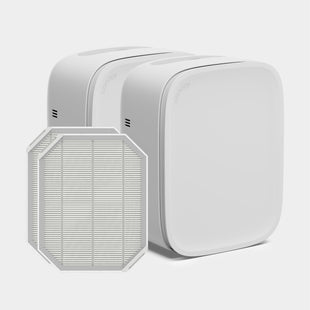
For the most powerful air purification, look for a device that can filter ultrafine particles. With both HEPA 13 and activated carbon filtration, Canopy’s air purifiers capture dust, pollen, dander, and odors, as well as smoke and airborne particles as small as 0.3 microns*.
* - Tested to ISO 29463-3:2018 standards
With a sleek, lightweight design, it’s ideal for interior spaces, especially those in wildfire-prone or polluted metropolitan areas. And with seamless, no-touch filter changes, air monitoring powered by smart sensors, plus a Sleep-Safe Auto Mode that keeps airflow quiet and consistent, our air purifiers have intuitive features designed to support comfort and convenience.
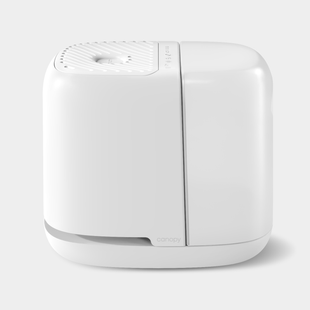
From promoting fresher indoor air to enhancing water quality, Canopy is your trusted source for modern solutions that keep your home healthy. Explore our full range of air purification options, including our stackable All-in-One Humidifier & Purifier, which frees up space in your home and provides plants with the balanced environment they deserve.
Sources:
- Colón, L. (4 February 2025). Unfortunately, Houseplants Don’t Actually Purify the Air. Good Housekeeping. Retrieved March 27, 2026, from https://www.goodhousekeeping.com/health/a63664656/can-houseplants-purify-the-air/
- Enroth, C. (6 October 2023). Can houseplants improve indoor air quality? University of Illinois Urbana-Champaign, College of Agricultural, Consumer & Environmental Sciences. Retrieved March 27, 2026, from https://extension.illinois.edu/blogs/good-growing/2023-10-06-can-houseplants-improve-indoor-air-quality
- Safavimehr, J. (17 February 2026). How to Prevent Indoor Plants From Getting Dusty. Southern Living Retrieved March 27, 2026, from https://www.southernliving.com/how-to-prevent-indoor-plants-from-getting-dusty-11906018
- (14 February 2024). Actually, Houseplants Don’t Clean the Air. American Lung Association. Retrieved March 27, 2026, from https://www.lung.org/blog/houseplants-dont-clean-air


