














Article Highlights:
Buying a humidifier is a simple way to make your home feel more comfortable, but how do you know which one to choose? Canopy designs humidifiers that are easy to use and maintain, look stylish in any space, and provide balanced hydration. With devices available in multiple sizes, there’s a Canopy humidifier for everyone.
Table of Contents:
- What Are Humidifiers For?
- Are There Different Types of Humidifiers?
- How Do I Choose the Right Size Humidifier for My Space?
- FAQ
The air in your home sets the tone for how well you sleep, how your skin feels, and how easily you breathe on a cold morning. When it's balanced, you barely notice it. When it's not, everything can feel slightly off. Running a humidifier is one of the easiest ways to make your space more comfortable. If you want the best humidifier but don't know what to look for, this guide covers everything you need to make an informed decision.
What Are Humidifiers For?
Most experts recommend keeping indoor humidity between 40% and 60% for most of the year1. However, most homes run well below that range, especially in winter when heating systems pull even more humidity out of already-dry air. The result is dry nasal passages, thicker mucus that's harder to clear, and skin that feels tight and dehydrated.
A humidifier raises relative humidity to a level that's more comfortable to live and breathe in. Balanced humidity helps keep your nasal passages comfortable, so breathing can feel easier. Canopy's own consumer perception research indicates that better breathing, more comfortable skin, and better sleep are some of the most common reasons people enjoy using one. Running one regularly can also reduce static and even help preserve wood furniture and flooring2.
Are There Different Types of Humidifiers?

Warm mist humidifiers, or vaporizers, boil water to create steam. They are usually the most affordable, but the FDA warns that they can swell nasal passages, carry a burn risk, and make breathing more difficult for kids3.
There are several types of cool mist humidifiers, which release room-temperature moisture and use less energy than warm mist models. Ultrasonic models vibrate to create microscopic water molecules released into the air, but can circulate minerals, bacteria, and mold from water, sometimes showing up as a fine white dust on nearby surfaces. The best evaporative humidifiers use a fan to blow air through a wet wick or filter, capturing minerals and impurities before they reach your space. They also shut off when you reach the desired humidity level, so they're less likely to overhumidify.
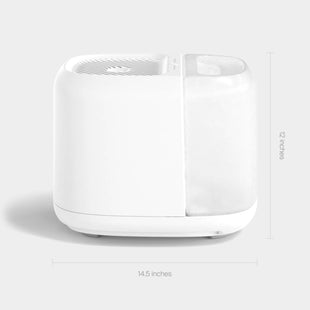
Canopy's Bedside Humidifier 2.0, Nursery Humidifier 2.0, and Large Room Humidifier all use evaporative technology to deliver cleaner hydration with no mist and no vapor. Water passes through a filter before it evaporates, so you get cleaner hydration without mist or white dust, and Smart Persistent Airflow (SPA) keeps it running until completely dry, so it stays fresh.
The Portable Humidifier delivers cool, light mist and balanced moisture when you’re on the go.
How Do I Choose the Right Size Humidifier for My Space?
Bedrooms
The air here affects your rest, so it's a top priority. When looking for the best humidifier for bedrooms, look for something compact enough for a nightstand and built to run safely throughout the night. Noise level is also important, since noisy devices can disrupt your sleep4.
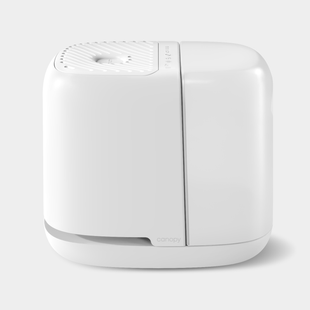
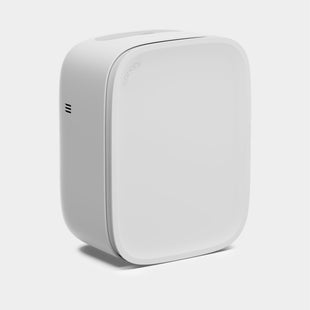
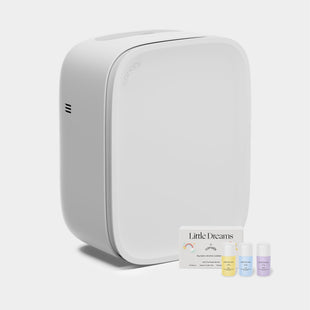
The Bedside Humidifier 2.0 was built for exactly this. It covers up to 500 square feet and runs for up to 36 hours on a full tank. There are also sleep settings like a dimmable red light, soft night light, and three soothing soundscapes, with optional aroma diffusion for the ultimate comfort.
Nurseries
Balanced indoor humidity helps keep your baby's nasal passages hydrated to soothe congestion. The American Academy of Pediatrics discourages using warm mist humidifiers in nurseries due to burn risk5, so an evaporative, no-mist option is the better choice. When choosing the best humidifier for babies, you also want it to be easy to clean and quiet so your baby can rest easily.
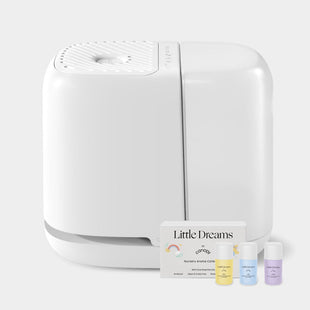
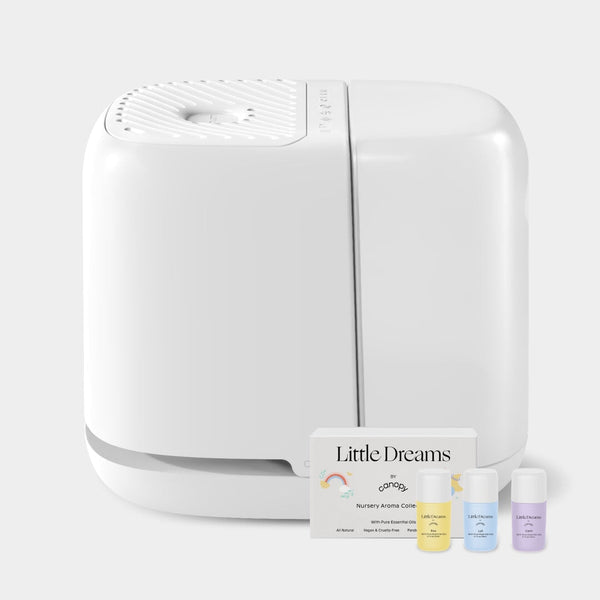
The Nursery Humidifier 2.0 has no mist, no vapor, and mold-inhibiting technology to help the device stay fresh*, and its dishwasher-safe parts mean one less thing to think about for busy parents. In a consumer study, 95% of parents noticed their child seemed less stuffy when using it, and 93% called it a must-have**.
* - Humidifier does not treat air; inhibits mold growth in device & filter. Third-party testing shown to inhibit growth of Aspergillus niger (commonly known as Black Mold) based on standard AATCC 30-2017
** - Based on an external Consumer Perception Study of 46 participants, after 30 days. Results may vary.
Living Areas
Open floor plans and larger rooms need more coverage, so look for a higher-capacity device. Placing the humidifier in a central, elevated spot and running a ceiling fan if you have one also helps the moisture spread more evenly.
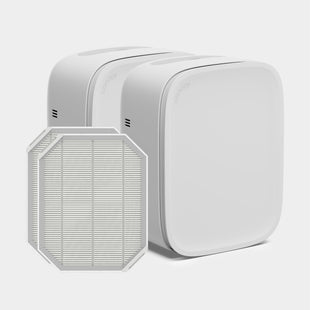
Our Large Room Humidifier covers up to 1,000 square feet using the same evaporative, no-mist technology as Canopy's other room models, with a MERV 5 pre-filter and an antimicrobial filter core* for cleaner hydration.
* - The filter media has been treated with an antimicrobial agent to inhibit fungal growth within the product. This treatment does not protect users or others against bacteria, viruses, germs or other disease organisms.
Small Spaces
Whether it's a home office, studio apartment, or hotel room, small rooms need something compact and quiet. The best humidifier will fit the space, run unobtrusively in the background, and be easy to move when needed.
The Bedside Humidifier 2.0 works just as well on a desk as on a nightstand and runs quietly enough that you'll forget it's there. For travel or spaces where you need portability, our Portable Humidifier is light, compact, and easy to bring anywhere.
Find your perfect home humidification device and filter bundle or subscription and enjoy more comfortable breathing with Canopy.
FAQ
What does a humidifier do?
A humidifier adds moisture to the air in your home, raising indoor humidity to a more comfortable level and helping prevent tight skin, a scratchy throat, congested nasal passages, and static electricity
Using a humidifier can also support easier breathing, more comfortable skin, and better sleep. Additionally, iIt can help keep nasal passages comfortable and help preserve wood furniture and flooring over time.
What is the best humidifier?
It depends on how big your room is, but the best humidifier is something that delivers clean moisture without adding mold, bacteria, or mineral particles back into your air. Look for evaporative technology, a replaceable filter, mold-inhibiting design*, and dishwasher-safe components.
* - Humidifier does not treat air; inhibits mold growth in device & filter. Third-party testing shown to inhibit growth of Aspergillus niger (commonly known as Black Mold) based on standard AATCC 30-2017
Canopy's Bedside Humidifier 2.0 is ideal for bedrooms, the Nursery Humidifier 2.0 is made for a baby's room, and the Large Room Humidifier handles big spaces up to 1,000 square feet.
What water is best for a humidifier?
While most humidifiers require distilled water, Canopy's filtered humidifiers work with any water. Tap water is totally fine for the Bedside Humidifier 2.0, Nursery Humidifier 2.0, and Large Room Humidifier. However, you may need to swap your filter a little more frequently if you have hard water.
The Portable Humidifier doesn't have an internal wicking system, so filtered, demineralized, or distilled water is recommended for the best performance.
What kind of humidifier is best for dry air?
For most homes, especially those with hard water, evaporative humidifiers are the best choice. Unlike ultrasonic models, which release water droplets directly into the air along with any minerals or impurities inside it, evaporative humidifiers filter the water they use. You'll get no white dust, no residue on surfaces, and cleaner hydration overall. They also automatically shut off when the room reaches the desired humidity level, so you're not oversaturating the air.
How do you choose a humidifier?
First, match the device's coverage area to your square footage. Then, consider who's using it. Nurseries need a no-mist, no-heat option. Bedrooms need something quiet that can last throughout the night. Larger spaces need more capacity. From there, look for easy maintenance, a replaceable filter, and mold-inhibiting technology. Canopy's lineup covers every space and use case, so there's something that fits your needs.
Sources:
- Arundel, A.V., Sterling, E.M., Biggin, J.H., and Sterling, T.D. (March 1986). Indirect health effects of relative humidity in indoor environments. Environmental Health Perspectives. Retrieved July 24, 2026, from https://pmc.ncbi.nlm.nih.gov/articles/PMC1474709
- St. John, A. (11 December 2025). Humidifier Buying Guide. Consumer Reports. Retrieved August 12, 2026, from https://www.consumerreports.org/appliances/humidifiers/buying-guide/
- (8 February 2018). Use Caution When Giving Cough and Cold Products to Kids. U.S. Food & Drug Administration. Retrieved August 12, 2026, from https://www.fda.gov/drugs/safe-use-over-counter-otc-medicines-children/use-caution-when-giving-cough-and-cold-products-kids
- Mifflin, M. (8 July 2024). 12 Things to Consider When Choosing a Room Humidifier. The Spruce. Retrieved August 12, 2026, from https://www.thespruce.com/room-humidifier-shopping-1908137
- Mehta, P. and Alli, R. (5 July 2024). What to Know About Safe Humidifier and Vaporizer Use for Babies. WebMD. Retrieved August 12, 2026, from https://www.webmd.com/parenting/baby/what-to-know-about-safe-humidifier-vaporizer-use-for-babies